
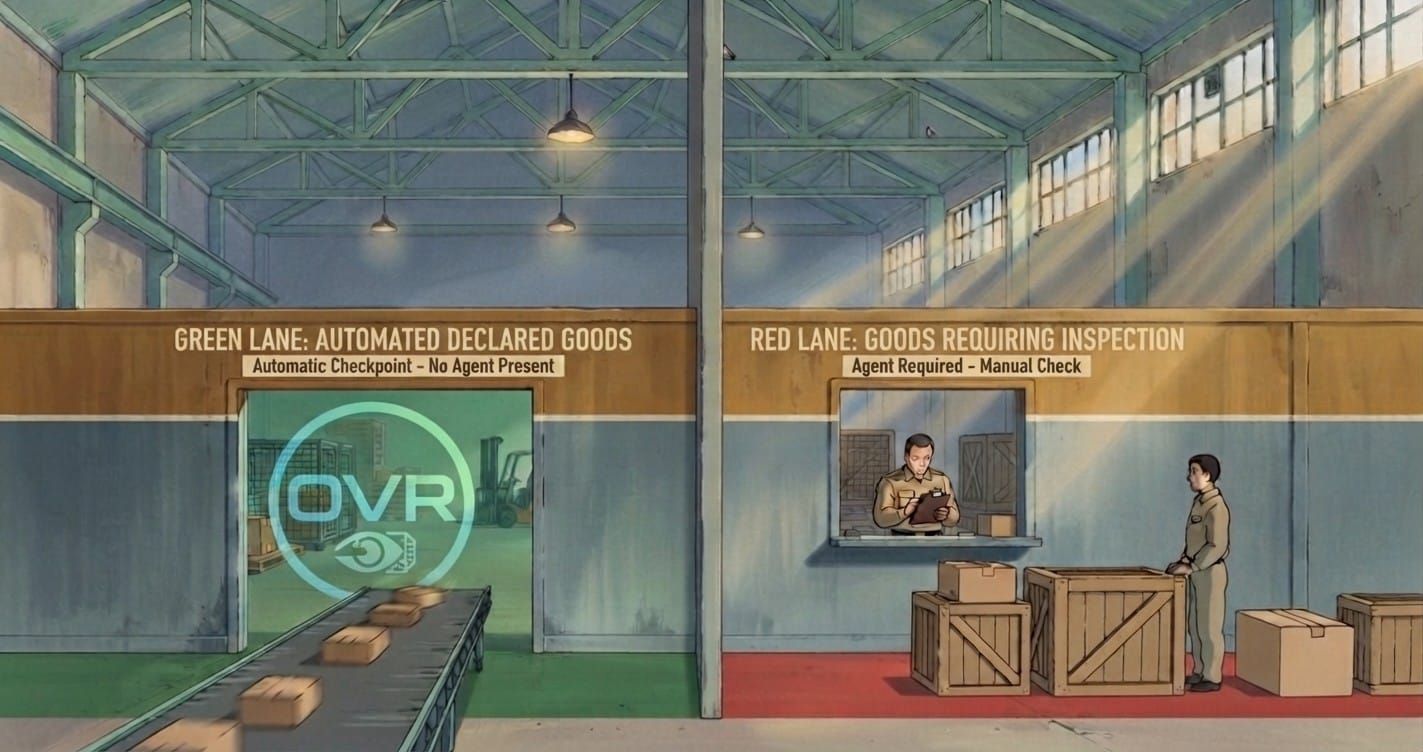
Ask a cross-border merchant what OVR requires and you will usually get some version of: overseas sellers have to register and charge Singapore GST at checkout.
That is roughly half of a sentence, and the missing half is where all the trouble lives.
I have spent a fair amount of the last few months on the receiving end of that missing half — first as a consumer who was taxed twice on his own order, then as a clearance operator watching the same misunderstanding produce misdeclared permits and unhappy buyers. The pattern is consistent enough to be worth writing down.
OVR is a bounded regime. Understanding where the boundary sits, and why it sits there, is most of what a merchant needs to know.
The gap it was built to close
Before 2023, a Singaporean buying a S$60 phone case from a local shop paid GST. The same person buying the same case from an overseas website did not, because small parcels arriving by air or post received import relief at the border.
That relief exists for a practical reason. Collecting a few dollars of tax on a parcel requires a declaration, an assessment, a payment mechanism and someone to chase the money. Below a certain value, the collection costs more than the tax. Every customs administration in the world draws that line somewhere.

But e-commerce turned a trickle of small parcels into a flood, and the line that had been a sensible administrative concession became a structural disadvantage for every local retailer. The same reasoning drove reform everywhere: the EU eliminated its €22 VAT exemption in July 2021 and introduced the Import One-Stop Shop, having estimated the exemption was costing member states in the region of €7 billion a year. The UK abolished its £15 relief in January 2021. Australia moved in 2018.
Singapore's answer, effective 1 January 2023, was OVR for low-value goods.
The mechanism is elegant. Rather than trying to collect at a border where collection is uneconomic, the law reaches back to the point of sale. A narrow class of overseas supplies is deemed to be made in Singapore, so the seller charges GST at checkout and remits it on a return, exactly as a local retailer would. In the GST Act these are not called low-value goods at all — they are “distantly taxable goods”, supplied under the Seventh Schedule.
No border assessment. No parcel held. No fee. The tax is collected where the money already is.
Where the boundary sits, and why
Here is the part that gets lost.
The regime applies only to goods with a sales value not exceeding the import relief threshold of S$400. That phrasing matters: OVR's ceiling is not a free-standing policy number. It is pinned to the border relief threshold.
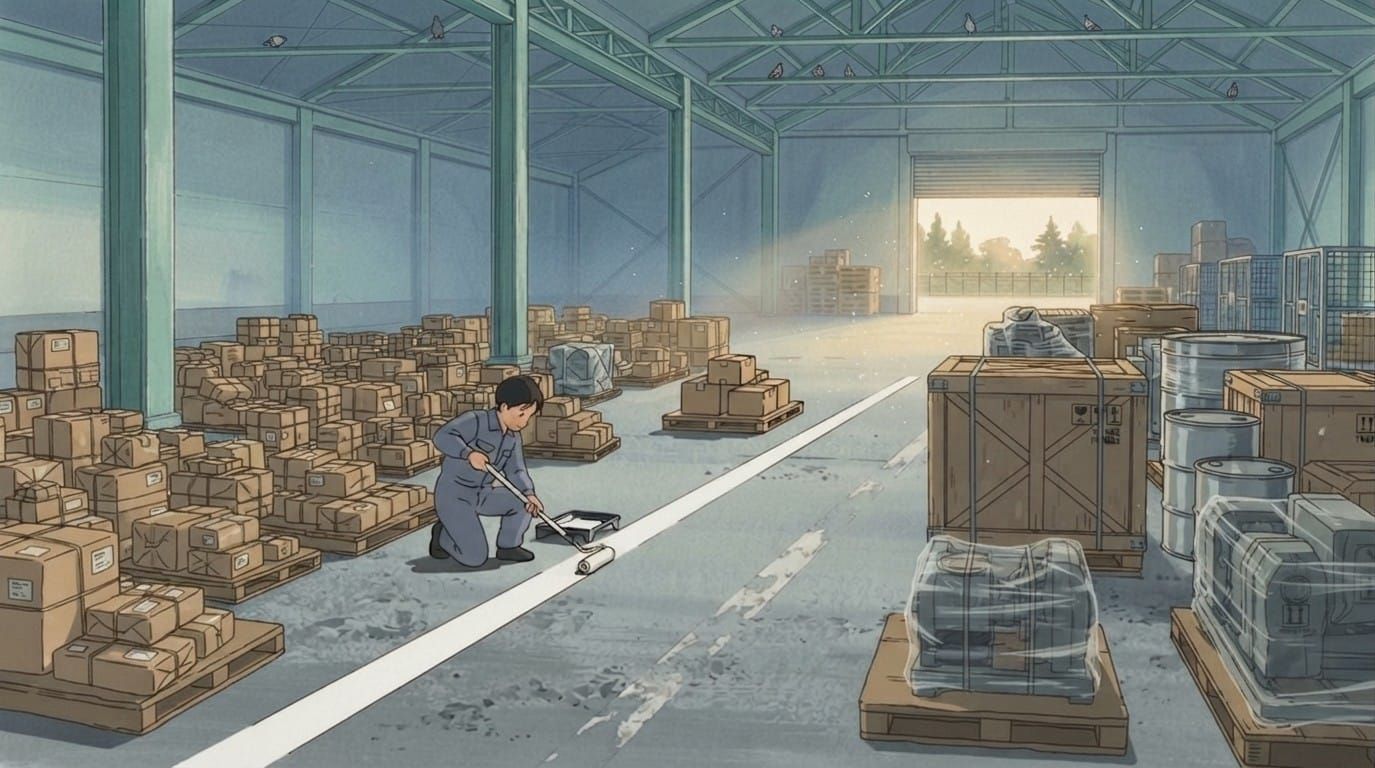
The logic is clean once you see it. OVR exists because the border cannot collect economically below S$400. Above S$400 the border already works — a permit is required, an assessment is made, GST is collected, and the machinery has functioned for decades. There is no gap there to patch.
So OVR was never designed as a general vendor-collection regime. It was designed as a substitute collection mechanism for exactly the range where the primary mechanism doesn't pay for itself.
Which means the S$400 is not a limit on how much GST an overseas seller may collect. It is the edge of the definition. Above it, the goods are simply not distantly taxable goods, the deeming provision never engages, the supply stays outside the scope of Singapore GST, and there is no output tax for the seller to charge. Singapore Customs puts it plainly: suppliers under the OVR regime are not allowed to charge GST on an item with sales value exceeding S$400, so as not to affect existing customs processes.
A seller who charges “GST” above that line is collecting a sum on an out-of-scope supply. It is not GST. It cannot be remitted on an OVR return. And the buyer will be charged again at the border, because relief does not apply.
Five limitations that follow from the design
It stops dead. It does not taper. There is no partial treatment, no blended rate, no grace band. One dollar either side of the line produces two completely different tax journeys — collected at checkout, or collected at the border with a permit and usually a disbursement fee. For a merchant with a catalogue straddling S$400, that is two entirely separate operating models running through one checkout.
The two tests are measured differently, and the difference is not intuitive. Whether an item is low-value is tested on its sales value — the selling price alone, excluding transport, insurance, GST and duties, assessed per item. Whether a consignment needs a permit at the border is tested on CIF, which includes freight and insurance, assessed per consignment. Both numbers are correct. They answer different questions. A S$390 item with S$35 of shipping is a low-value good at checkout and exceeds S$400 CIF at the border, and both statements hold simultaneously.
The EU landed on the same distinction from the other direction: its €150 threshold is based on intrinsic value — the price of the goods and nothing else, excluding shipping, insurance and other taxes, provided they are shown separately. Two regimes, same underlying problem: the number the seller sees and the number the border sees are not the same number.
It is a pay-only registration. This surprises people more than anything else. An OVR registration is a simplified regime for accounting for output tax on qualifying supplies. It carries no input tax entitlement, it is not a duty deferment facility, and it is not an account that a customs declaration can draw against. Merchants regularly ask whether their OVR number can be used at the border to suspend, redirect or reclaim import GST. It cannot. There is nothing there to draw on.
It depends on data travelling down a chain the tax authority does not control. For the regime to work, the vendor must pass two things down the logistics chain for every consignment: whether GST was charged, per item, and its GST registration number. If either is missing, or the registration number does not validate, the declaring agent must declare a payment permit — and the buyer pays a second time. The tax outcome depends on a data field surviving a hand-off between a merchant's order system, a freight forwarder, a declaring agent and a customs system. It frequently does not.
Enforcement runs on registration, not on goods. The great strength of border collection is that the tax authority has physical control of the item until it is paid. Vendor collection has no such backstop. It relies on foreign entities registering, charging correctly and remitting honestly, with market access as the ultimate sanction. That works well for large platforms with reputations to protect. It works less well the further down the tail you go.
The seam
Step back and the pattern in all five is the same.

Singapore now runs two collection mechanisms for one tax, divided by a value threshold. Vendor collection below the line, border collection above it. Each works. The failures happen at the seam between them.
Every problem I have catalogued this year lives at that seam. The double-charged buyer, where the checkout thought it was below the line and the border knew it was above. The misdeclared permit, where the two information items didn't arrive. The merchant convinced its OVR number could do something at the border. The marketplace reasoning from a deeming rule that exists on one side of the line and applying it to the other.
Nobody owns the seam. The merchant's tax engine sits on one side, the declaring agent on the other, and neither can see what the other did. That is a structural feature of running two mechanisms for one tax — not a failure of anyone's diligence.
Where this goes next
Two things are moving, and they are moving in different directions. Conflating them is the most common mistake in commentary on this subject.
De minimis relief is being abolished, globally and fast. The direction of travel is unmistakable. The EU removed its VAT exemption in 2021 and voted in November 2025 to remove the €150 customs duty exemption as well, with an interim flat €3 duty on sub-€150 parcels from 1 July 2026. The exemptions that let low-value parcels enter untaxed are closing everywhere.
Vendor-collection ceilings are a separate variable, and they vary widely.
| Market | Vendor collects at checkout up to |
|---|---|
| United Kingdom | £135 |
| European Union | €150 |
| Singapore | S$400 |
| Australia | A$1,000 |
| New Zealand | NZ$1,000 |
Australia has operated vendor collection at A$1,000 since 2018, with border collection continuing above that. New Zealand sits at the same level. So a ceiling well above Singapore's is not theoretical — it has been running for years in comparable jurisdictions.
That is the honest case for the threshold rising. Collecting at checkout is administratively cheaper than collecting at a border, for the state and for everyone else in the chain. If the mechanism is trusted at S$400, the argument for trusting it at S$1,000 is one of degree rather than kind.
The counter-argument is structural rather than philosophical. Because Singapore's OVR ceiling is defined by reference to the import relief threshold, raising one means raising the other. More goods would receive relief at the border, and more revenue would depend on voluntary compliance by entities outside Singapore's enforcement reach — at exactly the moment when the rest of the world is moving to reduce the volume of goods crossing borders untaxed. There is also a practical floor: above certain values, duty liability, controlled goods checks and valuation disputes require a border process regardless of who collected the tax.
My own read, offered as reasoned inference and not as forecast: some upward movement is more likely than none, because the administrative logic is sound and the comparators exist. Wholesale abolition of border collection is not, because physical control of goods is the enforcement backstop that makes the whole system credible. I would expect the ceiling to move before the architecture does.
Either way, the seam does not disappear. Move the line and you move where the seam sits. You do not remove it.
What to do about it in the meantime
Nothing in the above is a reason to wait for policy. Four things are worth doing now regardless of where the threshold ends up.
- Run the entry value test on post-discount goods value, excluding freight and insurance, per item. Then verify it fires on a live above-threshold order rather than trusting the configuration. Most carts were set up at market launch and never revisited.
- Never charge GST at checkout above the line. If you want a consistent GST-inclusive price across your whole catalogue, the mechanism is a duty-and-tax-paid delivery arrangement, or a Singapore GST registration and a change in where title passes. It is not OVR.
- Make the two data items non-negotiable in your logistics integration. The per-item GST-paid flag and a valid registration number. If your 3PL cannot carry those fields per item, that is a tax problem wearing a systems costume.
- Know which side of the seam each SKU sits on, per market. The regimes differ, the thresholds differ, and the measurement bases differ. One global cart rule is guaranteed to be wrong somewhere.
The regimes will keep changing. The seam is permanent. Build for the seam.
I run WMG Pte Ltd, a postal service operator licensed by the Singapore government, moving cross-border e-commerce parcels across sixteen APAC markets. Most of what we do sits precisely at the seam described above — determining duty and tax correctly at origin so that nothing has to be collected at the door. If you have never pressure-tested your above-threshold orders into Singapore, it is worth an hour.
Jim HuangGroup President, WMG Pte Ltd